Articles
Recent Posts from my Substack Blog The Common-Sense Dispatch

The Cost of Our Silence
There are times in a nation’s life when the darkest times of danger are not when the shouts are the loudest, but during the silence that follows.
Hate and cruelty don’t normally arrive draped in a banner that reads Here I Am. They slip in during the exhaustion caused by the constant chipping away of a society’s civility and norms. We have witnessed this in recent years; when hateful rhetoric circulated widely during public debates, many bystanders looked away or chose not to intervene, believing it safer or more comfortable to stay silent. For example, when harassment targeting school board members and public health workers increased, much of the community remained quiet, hoping the furor would die down on its own. People become silent when they view their silence and withdrawal as their best hope to protect themselves and their loved ones. It is quite simple; silence becomes a daily negotiation between comfort and conscience. It is the quiet agreement we make with ourselves when we say, “This is not my fight,” or “This will pass,” or “Someone braver will speak.”

Our Conscience and The Tipping Point
Start with the 100th monkey theory. A monkey washes a sweet potato in the surf before eating it. Others follow. Their numbers grow, and when the 100th monkey adopts the new skill, it jumps to other monkey groups seemingly like magic, even if they’ve not witnessed the skill. Scientifically proven or not, the idea helps visualize why some ideas and opinions grow and others wither and die.
History offers sobering parallels to consider; examples where societies normalized hate. We don’t have to name them, but they help us understand how we arrived at today in America if we are honest about who and what we have become.

The Work of Courage Over Time
Responsibility lives in layers. That much is obvious. People should be responsible for themselves first. That is the starting line, and we all know that too many of us fail right there. We never hear the starting gun, or we forget about ourselves and move outward too quickly — to family, jobs, hobbies. Our responsibilities as people living day to day are many. All of them point to one inescapable truth: we live in community, in a culture, ours—and once our responsibility to protect and defend what is right in that culture awakens, it does not sustain itself automatically.
There is an inevitable moment when seeing turns into responsibility—when conscience stirs, when silence becomes difficult, when the moral core of us refuses to look away. But what follows that moment is far less dramatic than we often think. Responsibility does not live on adrenaline. It does not survive on outrage. It is not revealed in viral moments or public declarations.

When What We See Turns into Responsibility
We speak about seeing as if it were passive, as if witnessing injustice were simply a matter of wrongs being revealed—images received, facts absorbed, awareness achieved. Seeing in and of itself never demands anything. We can turn away. We can distract ourselves into forgetting. We can imagine that once something has been seen, our moral work is finished. We know now. We are informed. We are awake. We say to ourselves, that is enough, but responsibility and history ask for something more. Seeing is only the threshold.
The real question begins afterward: what does what we have seen require of us? There is a point at which witnessing ceases to be observational and becomes participatory. A point at which the conscience, once stirred, begins to press for expression. It is no longer enough to acknowledge suffering. One must decide how to stand in relation to it. This is where responsibility begins.

Witness Where You Stand
As tempting as it is, we should not romanticize this. History shows us these heroic people. What we don’t see are the others, the ones like us—common, everyday people who stood in whatever way they could and said enough is enough. People who say no, this is not who we are or who we want to be.
Witness is not a costume. Witness is what happens when conscience refuses to cooperate. Daniel Ellsberg did not leak the Pentagon Papers because he wanted attention. He did it because the machinery of war was being sustained by deception, and silence had become complicity.
The two paragraphs above are a start. They are from my previous piece—When Our Silence Becomes Complicity—and seem worth repeating, and a good place to begin. So, here we go.
When Our Silence Becomes Complicity
A few questions to begin. Do we know the truth? Do we see them? Can we recognize the current state of our country and our culture? If we don’t, what stands in our way? Bias? Prejudice? Hate? And if we do, what then?
There are moments in history when the central moral question is not complicated. It is not hidden in theory. It is not buried in footnotes. It is not waiting for scholars. It is standing in the open. To put it simply, this is one of those times. Most of us know the truth of the moment. Most of us see it, even if barriers stand in our way. Most of us aren’t simple-minded, uncaring people.

The Words Written on our Hearts
On the murders of American citizens by our government
.
By way of full disclosure, I am a man of faith, but not of the Church. I was raised in a Baptist church. My mother was the church secretary, and growing up, I always had a close relationship with the pastor at the time. My conversations with them continue to impact my life and my thinking. As a freshman in college, my declared major was in philosophy and religion at a Baptist-supported, small junior college in North Carolina. I studied under several very good professors, most of them ordained Baptist ministers.

The Difference Between Law and Theater – The Jack Smith Hearing
Facts – Truth – And the struggle for legitimacy.
.
Yesterday’s congressional hearing with Jack Smith was not about discovering new facts. Those facts have already been examined, weighed, and affirmed by a grand jury of Americans. What we witnessed instead was something more revealing: the transformation of law into theater, evidence into performance, and accountability into narrative warfare. The hearing did not change the record — it exposed the culture. And it forced a question we can no longer avoid: do we still believe truth matters when power refuses to answer to it?

A Gift for the Children
In appreciation for your support, here is a Christmas short story from my collection – Lost Light – that I am waiting to publish.
A Gift for the Children
Two days before Thanksgiving in 1930, Hank Raymond stood in the gap between the day past and the night not yet come, watching the rich colors of the fall sky drain from the cirrus clouds stretching out of the sunset like willowy fingers. A thin shelf of rose-colored sky defined the arc of the horizon for a moment before disappearing into gray. The autumnal equinox was weeks past, but the days were stubbornly warm, extending the misery of a brutal August and September. A quintet of wood ducks flew south to north across the sunset and then swept east, following the run of Steerpen Creek. Hank turned with them, following their flight, until they keeled over hard, dropped one wing suddenly, and disappeared. “The acorns are down,” he thought and made a mental note to hunt the squirrels and woodies along the creek.

Never Enough Words – Narrator Major Award
Marcus Barton (Barton Voice Over) has won a 2025 Audio Book Reviewer award for Best Narrator for his voice narration of Never Enough Words.
When Government Fails, People Create Their Own Future
When institutions lose integrity, people rediscover their own, minting new forms of trust in a world that’s forgotten how to keep it.
Great books are timeless. To Kill a Mockingbird is one of them. If we listen to the words, the lessons the words teach say as much about our today’s as they do about our pasts. If we listen. In the process of teaching the book again, I listened with my students to Sissy Spacek’s narration, and I heard, as I always do the depth and the empathy of Harper Lee as Scout, the innocent visionary, tell truths about the America of her youth, truths that were hard, truths that because of their power, we tried to overcome to be a better America. I use the plural truths to say that there are many in the novel, but a small word – scrip – stood out for me this time, and the linkage from the scrip of the Great Depression to our today took shape.
During the Great Depression, when banks failed, men committed suicide, people began to starve, but out of their despair, communities across America adapted and began issuing their own emergency currencies, handwritten, stamped, or printed on salvaged paper. They were called scrip stamps, and they embodied the simplest moral logic: If the system cannot care for us, we will care for each other. These small local economies thrived briefly because they were grounded in necessity and mutual recognition. Every transaction was a confession of trust.

The Sons We Raise
In “The Air We Breathe,” I wrote about the cultural inheritance of racism and misogyny, poisons absorbed so deeply we treat them as normal. This essay continues that reckoning. The air hasn’t cleared; it has only thickened, and the sons we raise are still breathing it in. We will never change or heal what we refuse to name, not the racism, nor the misogyny, and the men we make will carry it, as we have. Confession is not weakness; it is the first act of a moral awareness. When men begin to name and face the truth about the power we have abused, a door, a space may open that gives permission for a kind of masculinity that does not need domination to feel whole and successful. The future of our children and grandchildren will not be the world we describe, but the one we build. We can choose. We do every day. Every act of humility, every moment of listening, every surrender of privilege can be a stone pulled from the wall we built between us and the truth. We begin this with power, ownership, and conflict; we can end it with responsibility. And so, we begin here.
We raise our sons to protect what we take, not to question why it is ours, or if it should be. That single sentence carries the inheritance of our age, a bitter seed we still sow and water every day. It speaks to race and gender, privilege and fear, and the way we disguise control as care. I write not to accuse, but to confess. We are the fathers of a culture built on ownership, of land, of women, of truths that should never be. We pass those ideas down like commandments. They define us and mark our success. It is our inheritance.
The Air We Breathe
The Embedded Psychology of Racism and Misogyny
I was born into a world ruled by segregation. 1952 South Carolina. I sometimes try to mitigate the impact of my raising by telling myself worse places existed. Perhaps they did, but I only know the air I breathed, the air of my own community. Even though my DNA shows African heritage, I’ve never lived one millisecond of my life as a black human being. Only people who live and are living in black skin can say how bad it was and is. I make that simple statement, knowing that many white people will ignore the truth of it or simply disagree.
We live in an odd and dangerous culture. Without question, it is a white centrist culture. It is also misogynistic. The two often run parallel; they are the parallel inheritances of white entitlement. We have two Supreme Court justices who faced plausible accusations of sexual harassment and assault. The allegations alone should have been enough to bar them from being rewarded with lifetime appointments to the Court. They were not enough. Unfortunately, in our culture, the accuser often becomes the victim who nearly everyone attacks. That is true for the accusers of both Clarence Thomas and Brett Kavanaugh. The continuing costs of those cultural moral failures are starkly evident today in the Supreme Court diminishing the rights of women.
Words and American Democracy
When words become weapons
A beginning
In my last post I introduced an idea, America’s Green-Book for Defending Democracy, a field guide for our own time, mapping Safe People, Safe Places, Safe Platforms, and Safe Pathways. If the Green-Book is about finding truth and refuge, this essay is about naming the forces that try to dismantle both. Enemies, opponents are created in what threatens us and our fear. Some manage the narrative to accomplish those goals, not between us and foreign adversaries, but between Americans, between ourselves.
The battle we are in is not only about laws or elections. It is about our words, how they are twisted, weaponized, and used to shift the boundaries of what Americans accept are normal. Political scientists call this The Overton Window, and knowing what it is helps us understand for instance, why antifascism can be branded as extremism by one side, why fairness can be mocked as bias, and why lies can be repeated until they sound like common sense.

Announcing a Project
A Plan of Action
Introduction
What follows is not a finished product but a beginning. The Negro Motorist Green-Book was written in the 1930s to help Black Americans survive the simple act of traveling. Today, we need something like it again—not for roadside diners and motor inns, but for democracy itself.
This project, America’s Green-Book Defending Democracy, is meant to grow into a living guide: a map of Safe People, Safe Places, Safe Platforms, and Safe Pathways. It will not work if it is mine alone. It has to be built by us, tested by us, carried by us.
I am asking you, my readers, to take part in that work. To help identify the “College Inns” of our own age, the libraries that refuse censorship, the neighbors who hold the line of truth, the communities where dignity is not for sale. To add your stories, your knowledge, your witness.

The Frog in the Pot – The Water is Boiling
Washington calls it “war,” and we respond. We define ourselves with our words and our actions. None of us are innocent and none of us are immune from the costs. At this point, it really doesn’t matter where you stand politically or socially. If we are honest, if we face the hard truths, all of us are guilty. We’ve grown addicted to cruelty and violence as spectacle, and now our addiction fuels hate speech and violence and killings. The murders of Charlie Kirk and the Hortmans in Minnesota are the tip of an iceberg of violence and brutality occurring all over the country ordered by an administration whose first task should be the protection and security of America.

Americans – the frogs in boiling water
Authors Note: This essay builds on my last piece – Revenge and the Politics of Addiction – exploring how gradual normalization (the frog in boiling water) explains the cultural collapse of standards and civility in America.
America is the “frog in boiling water.” On her show a few days ago, Nicolle Wallace presented this as the perfect metaphor for today’s America. It is a parable about complacency. The parable says if you toss a living frog into boiling water, it will jump out to save itself, but if you put the frog in cool water before turning on the heat, the frog doesn’t notice the danger and will stay in the water until it is too late. The parable explains who we have been, who we are, and unless we can change the arc of our cultural behavior, who we will be into a dark future that is both frightening and unrecognizable to those of us who still believe in the traditional American Dream.

Revenge and the Politics of Addiction
Author’s note: After months of reading and thinking, this essay launches a new series and is the foundation for a book in progress and podcast — Addiction Politics: How Revenge Hijacked America and How We Break Free. Over the coming weeks I’ll explore how our politics became addicted to outrage and vengeance, why facts alone can’t break the cycle, and how forgiveness and restoration may be the only cure strong enough to save American democracy. So here we go…
America is sick. We all know it, but it’s not a sickness in the way we usually think. Talking heads, the media, call it “polarization.” Politicians call it a “divide.” Others call it a “culture war,” a “battle for the soul of the nation.” All those words fit. We all see it; we talk about it over and over, but the deeper truth is darker and more unsettling. America is addicted: to outrage, to revenge. America has devolved into a dystopian parody of the American Dream..

Understanding the Paragon – Trump and the Mob – MAGA
“If you know the enemy and know yourself, you need not fear the result of a hundred battles. If you know yourself but not the enemy, for every victory gained you will also suffer a defeat. If you know neither the enemy nor yourself, you will succumb in every battle.”
— Sun Tzu, The Art of War
If Donald Trump were a character in a novel, he would not be a statesperson or a visionary. He would be the trickster-king, the unreliable narrator, or the villain cloaked as a savior, a man driven by grievance, ego, and instinct. His story would not be about governance but about spectacle. What makes this narrative even more compelling, and dangerous, is that millions of Americans see themselves in his story. The psychological bond between Trump and his followers is not incidental; it is symbiotic, mythic, and deeply rooted in identity, fear, and resentment. To understand Trump is to understand MAGA, and to understand MAGA is to face the fractured soul of the American electorate.
The Blueprint of Defiant Citizenship: How We Win Back Democracy
You have no right to be silent.” —James Baldwin
I sometimes teach The Bluest Eye by Nobel Prize winner Toni Morrison. With every book, I give students the chance to opt out of the reading if they or their parents have objections. I never judge the validity of their objection; I allow them to choose another book on the same reading level and send them to the library when the class is reading or discussing the book. The last time I taught Morrison’s fine novel, in the beginning, none of the students opted out. At the point in the story when the father character sexually abuses his daughter, a female student had concerns.
The Enemies of Defiant Citizenship
What destroys our democracy isn’t chaos. It’s our comfort, our distractions, and our blindness to what we owe each other.
In my last post, I wrote about the sacred work of citizenship, not as papers to fill out or tax returns to be filed, but as a purpose and a responsibility. It should be a calling for each of us. Defiant citizenship, I argued, is the heartbeat of democracy. It’s messy, moral, and collective. It’s how ordinary people rise to defend freedom, equality, and justice in moments when those ideals are under siege. This moment is one of them. It demands our attention and action.

We Need Defiant Citizenship
In Leaves of Grass, Walt Whitman proclaimed, “I am large, I contain multitudes.” With those words, Whitman captured the messy, magnificent spirit of American democracy: a nation made not of sameness but of countless individuals bound together by a shared promise of liberty and justice for all. Today, we see identity politics undermining civic unity, common purpose, and goals while opening the door to the zero-sum politics that history teaches us precedes authoritarianism and, yes, fascism.
We should remember Whitman’s vision and the visions of Americans of every description over the past 250 years. The strength of democracy has never come from demanding that people erase who they are and bow down to those in power. It comes from building a “bigger we” at every challenging opportunity, one that is open to every voice and one that calls each of us to the sacred work of citizenship. The “bigger we” has sometimes been violent, often frustrating, and always messy and uncomfortable, but Americans, true ones, defiant ones, always rise to the call of citizenship. Authentic defiant citizenship does not reject identity; it draws strength from all, forging a democracy where every voice contributes to the common good.

The Soul of America is Ours to Own
From Coltrane to the Capitol: Has America Criminalized Conscience?
America is a complex tapestry woven of many threads. Music is one of them. Aaron Copeland’s “Appalachian Spring” celebrates the promise of America as we once saw it. Then, there are others: music of frustration, music of mourning, music of protest. Today, as I do occasionally in the early morning, I listened to John Coltrane’s recording of his requiem, “Alabama.”
On November 18, 1963, two months after white supremacists bombed the 16th Street Baptist Church in Birmingham, murdering four Black girls attending Sunday School, John Coltrane stepped into the Van Gelder Studio and recorded it. It had no lyrics. It needed none. It was a mourning, a prayer, a protest wrapped in sound. Accompanied by McCoy Tyner on piano, Jimmy Garrison on bass, and Elvin Jones on drums, Coltrane’s saxophone, sober, anguished, and deliberate, echoed the cadence of Dr. Martin Luther King Jr.’s eulogy for the slain children.

We No Longer See the River in America
Words matter. Sometimes they create and project into readers and listeners power and inspiration to either rise or descend into beliefs and movements that are normally beyond them. We’ve seen the costs of negative words nearly every day, but we hope for better. A simple construct chosen well can elevate even the simplest sentences to the level of magic. They speak to us in ways that we feel, even if we don’t completely understand. I remember reading Life on the Mississippi for the first time as a twelve or thirteen-year-old boy. One passage affected me then and taught me how to look deeper at things and events that, on the surface, seem ordinary. The passage still does, even now, each time I read it.

The Age of Assholes: Why Decency Still Matters
We are living in what I can only describe as The Age of Assholes. You know what I mean. We see it every day. Painfully, we see it in our politics, on our roads, at school board meetings, and on our screens. Rudeness is rewarded. Cruelty is celebrated. Outrage is monetized. Morals and simple decency are dismissed as weaknesses. The shapeshifters and wordsmiths of the Right even call it “virtue signaling,” as if being a considerate and kind human being is part of some devious plan. The worst part is that too many Americans believe them.
All of the horrible things they have done and continue to do become acceptable when they can convince their lemming-like followers that being decent, kind, and considerate is on equal footing to fraud, lying, and sexual abuse. It goes without saying that Donald Trump is the high priest of this age (one only needs to look at the record), but he’s not alone. Marco Rubio serves up smugness like it’s a virtue. His chameleon-like hypocrisy is obvious. J.D. Vance, who once wrote about the decay of dignity in working-class communities, has now sold out to the highest bidder, revealing that he never had the morals and decency he once claimed. He now performs nightly for a crowd that feeds on grievance and gives standing ovations to cruelty.

When We Vote Against Ourselves
The right’s real agenda isn’t family values, border security, or free speech. It’s the concentration and control of wealth. Everything else is theater — elaborate, divisive, and dangerous theater. And for far too long, it’s worked.
You’re not imagining it — we are voting against ourselves. Working families, veterans, teachers, and small-town Americans are being used, deceived, and discarded.
Pay attention to what’s happening in Texas. It is, without doubt, the laboratory of Authoritarian Capitalism. Under Governor Greg Abbott, Texas has become the model for what the right truly wants, a state where corporations rule, and public education is under siege. Individual rights are only protected if they align with far-right ideology.

Differences Deeper Than Skin
Time as an Ideology
“Time isn’t neutral. It can either uphold justice or become a tool for liberation, depending entirely on whose hands it rests in.”
-Brittany Packnett Cunningham
At its most basic level, history talks about the passage of time, and history is too often told only from the perspective of the dominant narrative. The dominant narrative of America tells time like it tells history, selectively, triumphantly, and often dishonestly. We are a nation obsessed with forward motion: progress, innovation, growth. From Manifest Destiny to Silicon Valley, the dominant cultural ethos insists that the past is an unnecessary weight to be forgotten before moving on, not a truth that may need to be faced. The question then becomes, what if this obsession with “the future” is itself a form of control? What if our forgetting is not a healing but an erasure

The Trojan Horses of Our Culture
Recognize them and starve them out of business.
I remember when Newsweek was a pillar of American journalism. For decades, it delivered deep reporting, international insight, and balanced coverage to millions of readers every week. It was part of the national fabric—a respected voice in the chorus of American media. Sadly, today, Newsweek is very different. It is a cautionary tale, a cultural Trojan horse: a once-trusted institution that now serves as a platform for misinformation, right-wing outrage, and political distortion—all under the guise of “both sides” journalism.
The transformation began in the mid-2010s when Newsweek was sold to IBT Media, a company with shadowy ownership and connections to a fringe evangelical church known as the “Community of the Word.” Since then, its editorial direction has shifted dramatically. Traditional journalists were pushed out. In their place came culture war columnists, partisan operatives, and clickbait specialists.

The Moral Collapse of Our Nation
The War on Truth
The existential threat America faces today did not begin with the 2024 election. Still, the election and its results bring the threat to American democracy into an hour-by-hour, day-by-day focus. It is very clear: the United States is in the throes of a moral and intellectual crisis.
Democrats and Republicans disagree on policy, but the differences are much deeper. They live and operate in different realities. Because of this, what’s taken their place is a toxic mix of authoritarianism, reactionary outrage, cultural resentment, and an almost religious devotion to misinformation. It is no longer a simple crisis of bad governance. It’s a moral crisis of character.
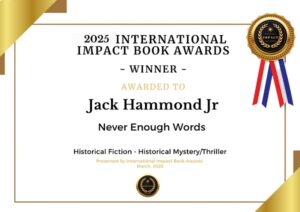
International Impact Book Award
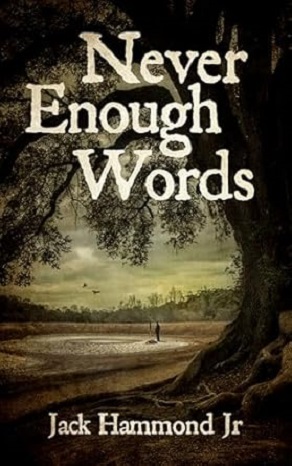
Never Enough Words
The book is available on Amazon in Print, Kindle, and Audible.
The narrator is the award-winning voice actor, Marcus Benton.
I have free Audible US and UK access codes. Contact me if you would like one.
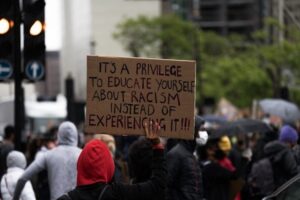
The Embedded Psychology of Racism: The Air We Breathe
I was born into a world ruled by segregation. 1952 South Carolina. I sometimes try to mitigate the impact of my raising by telling myself worse places existed. Perhaps they did, but I really don’t know. Even though my DNA shows African heritage, I’ve never lived one millisecond of my life as a black human being, and only people who live and are living in black skin can say how bad it was then and is now. I make that simple statement, knowing that most white people will disagree.
We live in an odd culture. Without question, it is a white centrist culture. That white people are the ones who can define the cost of slavery, Jim Crow, segregation, and the embedded Racism of today inflicts on black Americans is wrong. However, that is the state of our culture, and we can find its roots in the idea, almost genetic at this point, of superiority that white Americans hold. My generation was surrounded by walls not made of bricks but of ideas. The ideas that drew lines between people told stories about who mattered and who didn’t and instilled in me, without my consent, a narrative of superiority. I did not choose this inheritance. But unless we name it, examine it, and dismantle it, we risk passing it on quietly to the next generation. I see it every day in my classrooms of high school students.
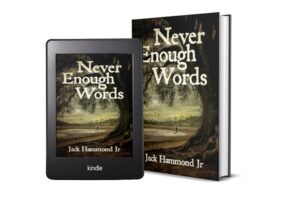
Never Enough Words – Now on Audible
My latest novel – NEVER ENOUGH WORDS – was released in November of 2024.
It released yesterday on Audible. I was very lucky to find a narrator like Marcus Barton. He is an award-winning narrator with many books on Audible in addition to many other types of voice work. He did and does great work.
From Amazon – In this powerful novel by Jack Hammond Jr, narrator Marcus Barton reveals a tale from the Deep South during the Civil Rights era. His powerful narration amplifies the power of the novel itself in ways that are both poignant and insightful
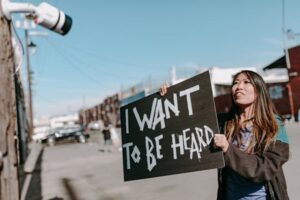
A Leadership Void in the Fight Against MAGA
Last week, I outlined how Dietrich Bonhoeffer’s warnings about collective stupidity help explain the rise of MAGA, the Tea Party before it, and the long history of right-wing authoritarian movements in America. These movements do not need reason or fact; they require only a crowd bound by grievance, rage, and the illusion of righteousness.
From here, we must ask this question: Trump and the Republican Party have successfully built a movement through manipulation and misinformation. Can’t the Democratic Party create a powerful movement, one that matches the opposition, but one that is rooted in truth, justice, and the defense of democracy? It is possible, but where is the resistance leader, a charismatic and visionary figure, who can lead us beginning today? Where is that person or people?

Through a Dietrich Bonhoeffer Lens
Understanding America Today.
Mobs always begin as a murmur. There’s a moment, barely noticed at first, when grievances shared quietly at kitchen tables or in break rooms begin to echo louder—on talk radio, in comment threads, at town halls where the crowd seems bigger than you expected. Faces nod in agreement. Rage finds a rhythm and more voices. Truth, always complicated and always needing careful consideration is thrown aside. Hate and frustration is distilled into slogans and scapegoats. Over time, the murmurs become a roar.
Dietrich Bonhoeffer understood this better than most. In the dark years of Nazi Germany, he watched his country succumb not only to tyranny but to a moral collapse. He called it stupidity, though not the kind we often mean. To Bonhoeffer, stupidity was not a lack of intelligence. It was a surrender—a choice people made, often in groups, to stop thinking for themselves. “Stupidity is a more dangerous enemy of the good than malice,” he wrote. The reason is chillingly simple: malicious people can still be reasoned with, perhaps even stopped. Stupid people—those swept up in the power of the crowd, blind to fact, deaf to reason—become, in Bonhoeffer’s words, “incapable of independent thought.” It is impossible to think about Bonhoeffer today without also thinking of the America we have become..

Born from Blood – An Unfinished Reckoning
America’s Original Sin(s)
For decades, right-wing media has dominated the narratives, particularly in rural AmericTruths are difficult to tell. Truths are difficult to face. Truths are difficult to mine from the detritus of history. Yet, these things are universal: truth is true. It is not changed by opinion, by rationalizations, by justifications, or by power. It endures, unyielding, waiting to be acknowledged and confronted. This is the foundation upon which we must begin our examination of America’s original sins.
America’s story is one of ambition, resilience, and innovation—but beneath the surface lies a darker truth: the nation’s foundation is built upon three enduring sins that continue to haunt its present. These sins—slavery, greed, and the attempted genocide of Native Americans—are not merely relics of history. They are enduring legacies woven into the fabric of the country, shaping its identity, its inequalities, and its collective conscience. To truly move forward, America must confront these original sins with honesty, accountability, and a commitment to change.

The Death of Decorum and Civility
How This Threatens Democracy
Decorum—once a fundamental expectation in public life—has become an endangered quality in American culture. With its close companions—civility, propriety, tact, courtesy, and respectability—decorum provided the behavioral framework that allowed diverse people to coexist in a functioning democracy. It wasn’t just about pleasantries or formalities; it was about maintaining the basic social glue that ensured disagreements did not spiral into chaos and governance could proceed with at least a common respect for the institutions involved.
For most of American history, political figures understood that good manners and social grace were not signs of weakness but tools of stability. Etiquette governed not only the dinner table but also the Senate floor. Courtesy was expected even among ideological rivals. Tact was essential when confronting the passions of a divided electorate. Leaders who strayed from these standards often found themselves corrected by colleagues or rejected by voters.

The Longest Coup
The Republican Party—the so-called Grand Old Party—is no more.
In its place stands a political movement unmoored from its former principles, driven by grievance, fueled by disinformation, and willing to embrace violence and intimidation to seize and maintain power. What was once a party of conservative governance has become a vehicle for authoritarian ambition, its evolution marked by decades of escalating tactics that have culminated in the ultimate threat to American democracy: the re-election of Donald Trump in 2024.
From the rise of partisan media enabled by the repeal of the Fairness Doctrine to the violent storming of the U.S. Capitol on January 6, 2021, and now to Trump’s return to the White House, the Republican Party’s trajectory is one of increasing radicalization, open contempt for democratic norms, and the dismantling of the very institutions it once claimed to defend.

How We Fight Right-Wing Media Dominance
For decades, right-wing media has dominated the narratives, particularly in rural America, shaping the political consciousness of millions through a steady stream of misinformation, fearmongering, and propaganda. The Right’s control of the narrative has turned what should be open discourse into an echo chamber of authoritarian ideology. Meanwhile, digital platforms, once a beacon of alternative voices, are increasingly manipulated by corporate and algorithmic suppression, limiting the reach of independent, progressive perspectives.
But there was a time when the airwaves were a tool of resistance. There was a time when voices like Wolfman Jack, pirate radio DJs, and underground broadcasters used border-blaster and clandestine radio to bypass government and corporate control, reaching the ears of the people directly. There was a time when shortwave radio carried messages of revolution, truth, and defiance beyond the borders of the powerful. It’s time to bring that back.

How Fake Populism Fuels the Right
And How We Can Take It Back
For decades, the Republican Party has mastered the art of fake populism—convincing millions of working-class Americans that their enemies are immigrants, LGBTQ+ people, college professors, and “woke elites” rather than the billionaires and corporations actually rigging the system against them. No convincing should be needed here. What else could explain why millions of Americans blithely walk into the voting booth to vote against their self-interests, to vote against themselves, their friends, and their neighbors?
The MAGA movement and Project 2025 are not populist in any real sense. They are designed to consolidate wealth and power among a right-wing elite while using culture wars to manipulate and enrage voters who are struggling economically. This playbook has worked before; convince people to fight each other while the rich get richer. But if the right can steal populism for their purposes, then we can take it back.
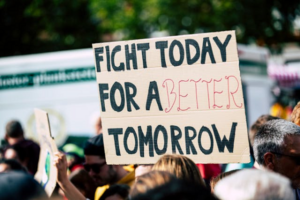
Elections Won’t Save us from Project 2025
For too long, Democrats have run on the promise that if the right people are elected, democracy will be saved. The 2024 election, like every election before it, was framed as the most important of our lifetime. But what if the real battle for America’s future isn’t at the ballot box?
We thought Kamala Harris and Tim Walz offered a better choice than the Trump-Vance agenda. The reality is this: even if they had won, the machinery of right-wing authoritarianism would keep grinding forward. The playbook behind Project 2025, a sweeping plan to dismantle democratic institutions and entrench minority rule, would not have disappeared with one election loss.
If we truly want to fight back, we need to stop thinking of elections as the solution and start building real resistance—the kind that a bad midterm or a Supreme Court ruling can’t undo. Resistance is a day-to-day responsibility.

The Death of the Fairness Doctrine
The Abuses by the Media as a Result
The Fairness Doctrine was eliminated in 1987 by the Federal Communications Commission (FCC) under President Ronald Reagan’s administration.
The Fairness Doctrine, established in 1949, required broadcasters to present controversial issues of public importance in a balanced and fair manner.
The Reagan-appointed FCC, led by Chairman Dennis Patrick, repealed the doctrine on August 4, 1987, arguing that it violated First Amendment rights and was no longer necessary due to the increasing number of media outlets.
Congress attempted to codify the doctrine into law, but Reagan vetoed the legislation.
The repeal is cited as a major factor in the rise of politically polarized media, particularly the explosion of conservative talk radio and right-wing news outlets like Fox News. The end of the Doctrine has profound effects on information dissemination, mainly captured in the rise of conservative media figures and strategic use of media by the GOP to spread misinformation.

A Simple Place to Start
Survival of the Peaceful Renegades
John Prine – a very peaceful renegade. Isn’t that what we should all aspire to? At least those of us who are appalled by the state of America should be peaceful renegades chipping into the resistance one word, one comment, one conversation every time we are presented with opportunity. The words of Prine’s “Spanish Pipedream” is a fine place to start.
“Spanish Pipedream (Blow Up Your TV)” John Prine (John Denver cover video)
She was a level-headed dancer on the road to alcohol
And I was just a soldier on my way to Montreal
Well she pressed her chest against me
About the time the juke box broke
Yeah, she gave me a peck on the back of the neck
And these are the words she spoke
[Chorus:]
Blow up your TV throw away your paper
Go to the country, build you a home
Plant a little garden, eat a lot of peaches
Try an find Jesus on your own.

The Common-Sense Dispatch
Why a name change?
Over the past years, I’ve posted over one-hundred entries here under the name – Fighting the Red Tide. I have depended on facts, truth, and logic. In that time, I don’t imagine I’ve changed one opinion or one mind that didn’t already agree with my ideas. That is the way it is.
Some have asked. Why do it? Why waste your time?
The simple answers are these. I am an optimist. I can’t help it. I simply am. I believe in the lofty goals of our Founding Fathers even though they have never been realized. I believe in truth. I believe in logic. I believe in America. Even through the disappointment of recent days, I believe, and it’s not a cheap word for me. I do.
So, welcome to The Common-Sense Dispatch, where the focus will be on one fundamental truth: America works best when it works for everyone. Our mission is simple but urgent—finding policies and strategies that uplift the common people, strengthen our communities (both urban and rural), preserve our culture, and secure the future of our nation..
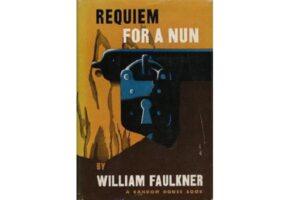
The Past is Never Dead. It’s Not Even Past.
Of course, the title is not mine. It is from the mind and work of William Faulkner. It appears in the sequel to Sanctuary, Requiem for a Nun, written twenty years after its prequel and a year after Faulkner’s Nobel Prize acceptance speech. I am often asked what my favorite novel is or who my favorite writer is. I have trouble with questions like those for a simple reason. There are too many great novels and too many equally great writers. However, if I were forced to limit my choice to one writer, it would be William Faulkner. I come back to him time after time. He is a safe harbor in challenging times, a touchstone, a place to ground one’s thinking and perspective.
Even then, I would be hard-pressed to name one novel from him or the many other incredible novels from other writers. Faulkner’s The Sound and the Fury is high on my list, but how does one accurately compare it to Gilead by Marilynne Robinson, Suttree by Cormac McCarthy, or even Slaughterhouse-Five by Kurt Vonnegut, and Four Souls by Louise Erdrich. We move, our thinking moves; we change. Choice and favorites depend on time and circumstance.
2 Weeks After Release – Never Enough Words
After two weeks, Never Enough Words has received good reviews. Naturally, I am happy about those. I would ask all of you to share the links below with your friends and contacts. Thanks for your support of my writing. A review follows:
Never Enough Words Jack Hammond Jr. Independently Published (2024) ISBN: 979-8340234841 – Reviewed by Amanda Caswell for Reader Views (11/2024)
5 Star- Wrestling with personal struggle and societal unrest.
Jack Hammond Jr.’s “Never Enough Words” digs deep into the lives of ordinary people struggling with the extraordinary weight of history, personal traumas, and the shifting societal landscapes of the American South. Readers should understand that this is without a doubt a heavy read, yet, through the expressive storytelling of Hammond, it is one that is worthwhile because it gives the reader pause. This novel is for thinkers, and I believe there’s no better time for a book such as this.

The Lost Foundations of Public Education
Thanks for your readership and support over the years.
In facing election results that are both shocking and bitterly disappointing, the question becomes simple. What now? That being said, the focus of this blurb must become one about the challenges we face as a culture, as Americans. I believe one of the most important factors in our slide into the Republican landslide is the serious and continuing decline in public education. What follows is an introduction to a book I am beginning to that end.
“Education has always been about more than books, pencils, or desks. At its core, education shapes who we are and who we want to become. It’s the mortar that holds our communities together, the promise of opportunity, and the foundation for a life well-lived. John Dewey once said, “Education is life itself.” Sadly, somewhere along the way, we lost that thread. Where public education once centered on growing citizens, thinkers, and good neighbors has become a system obsessed with numbers, rankings, and tests. It’s a shift that didn’t happen overnight, but the consequences are all around us, and the costs are profound..
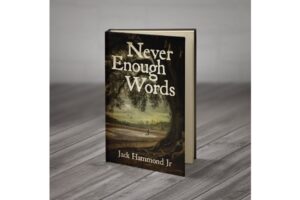
Never Enough Words – Launch Today
Never Enough Words is available today on Amazon.
Here are reviews from two Advance Readers:
“Jack Hammond Jr is the consummate storyteller. His latest novel, Never Enough Words, takes readers back to Scots Bend, a small town in South Carolina, in the 1960’s when the South was grappling with societal, sometimes painful, changes that frequently deeply divided communities, even families and lifelong friends. Having grown up in a small Southern town that, much like Scots Bend, also had its “hidden secrets and buried sins,” I could relate to the characters and the situations Hammond so masterfully draws out. I highly recommend Never Enough Words. Reading it caused me to remember both the good and the bad about the times it covers. Once I began reading, I couldn’t put it down.”
Frank White, Columbia, SC

The Greatest Gift
“The greatest gift is the moment of realization—the fragile instant when we see clearly, beyond the surface of things, into the heart of meaning.” – M Scott Momaday
America needs a moment of realization; we need that greatest gift. People who still support Trump and MAGA need the gift. With only days left, America needs a miracle. It is surreal that the Presidential election is a 50-50 contest. It is surreal that – Ted Cruz may be reelected. Rick Scott may be reelected. Marjorie Taylor Greene may win. Kari Lake may win. Control of both the Senate and the House are toss-ups. With clear choices before us, the election should be a blow-out in favor of Democrats up and down the ticket.
The truth about this election, especially this election, is that the outcome will define us as a country, but win or lose, our individual vote will define each of us. And so, we are standing in a moment of choice, an incredibly obvious choice. While this has always been true, the wide gulf between the respective visions of America defines us more clearly than at any other time in our history…
Never Enough Words – Novel Release Announcement
My second novel, Never Enough Words, will release on Amazon 10 days from now. November 1, 2024. The details are in the links below. While it is set in the 1960s, some early readers say it is very timely. I appreciate your support.
Never Enough Words
Excerpt:
When he was a young pastor, he was troubled when other pastors wouldn’t accept Jesus’ simple teaching, which left no room for the prejudice and racism that was endemic to the time. Jesus’ words were crystal-clear, and he never understood why others didn’t or wouldn’t see it. The Bible study was essential to the five pastors as it had been for his group in Mississippi. It gave the men something in common, a faith-based bond, and their time together built a sturdy bridge to friendship. Still, in the end, it was the communal prayer, five pastors praying for their people and their community, that Alston believed was vital, especially on this Monday, given recent events. They needed it, and so did he..

Politics 2024 – A Lament
We thought we were smarter. We thought we were more civilized. We thought we could not be taken in by charlatans bent on finding the weak openings of our frustrations, fears, and anger. After all. we are America, “the land of the free, the home of the brave.” We are e pluribus unum: out of the many, one. We are “one nation, under God, indivisible, with liberty and justice for all.” We are that nation, right? Or have we left that nation behind? Are we a different America?
Sadly, the 2024 political landscape can be seen as a lament, a reflection of the deep fractures and divisive forces tearing at the fabric of American society. What we’re witnessing isn’t just another contentious election—it feels more like a turning point that could shape America’s identity and its foundational principles for generations. Have we – individually and collectively – changed that much?.

The White Idea of Manifest Destiny
It starts like this. In October 2020, at a rally in Arizona, Donald Trump made a statement in which he said, “I don’t believe we’re going to have to do this, but if we have to, we’re going to be counting ballots for the next two years… and we’re not going to lose this. God is going to come down and say, ‘This is enough; we’re not going to let it happen.'” Further, Donald Trump made a statement during an interview with Dr. Phil, saying, “If Jesus Christ came down and were the vote counter, I would win California, OK?” the former President added later. “In other words, if we had an honest vote counter, a really honest vote counter — I do great with Hispanics, great, I mean at a level no Republican has ever done. But if we had an honest vote counter, I would win California.” His statements are simply delusional, but not in the minds of his supporters. A belief in their superiority takes them in.
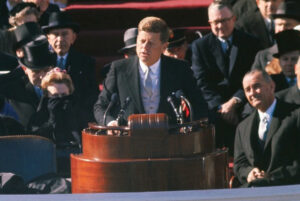
The Inauguration Speech of JFK
Does our common history matter anymore? Should our leaders be examples, people to emulate, people lighting a path for leaders who come behind them? Do words matter? Can language reveal a path to make us better? Can language pull us down into the depths of conflict and hatred?
Words do matter. Language matters – it can elevate us; it can demean and diminish us; it can lead us into useless wars, but it can also point the way to authentic acts of patriotism and altruism that benefits all humankind – and that is why we should read speeches like this one as often as we read bedtime stories to our toddlers.

It is Our Choice – Our Vote
In America, the power of personal choice may be the most sacred right citizens possess. That power should exist in every aspect of daily life, but nowhere is it more critical than in our vote. The act of voting is more than a civic duty; it is a reflection of our values, our priorities, and our collective vision for the future. When we consider the future of our nation, we must evaluate the candidates and policies through the lens of core American values—those principles that have defined our country and have been passed down through generations. Truth, justice, equality, fundamental rights, and the rule of law serve as pillars of American democracy. The leaders we choose will shape our nation according to these values, or they will ignore them, even to the point of destroying them. Let’s consider each value and how each is being challenged today.

2024 – The Impact of the Right-Wing Echo Chamber
Donald Trump’s political career has always been tied to the right-wing echo chamber—a bubble of media and ultra-conservative advisors that insulates him from mainstream discourse and truth. This echo chamber is made up of outlets like Fox News, Newsmax, and OAN, as well as advisors like Bannon, Gorka, Lewandowski, Loomer, and others. It reinforces extreme conspiracy theories and shapes Trump’s worldview.

THE COMMONSENSE VOTE
The foundation of democracy is one person, one vote. At its core, voting should accurately reflect the people’s collective will. In a perfect world, voters would choose based on policies that best serve their economic and social interests. In reality, voters often make votes that contradict their financial self-interest and well-being. Too frequently, cultural identity, misinformation, racial perceptions, and social values play an outsized role in how Americans vote.

A Time for National Redemption
Redemption, at its core, is the idea of making amends, seeking forgiveness, and moving toward a higher ideal after a period of wrongdoing or failure. We are in that place. On a personal level, it involves confronting one’s mistakes, acknowledging harm caused, and committing to change. In a modern political context, national redemption requires similar actions but on a grander scale—requiring a collective reckoning with a country’s past and present injustices. In America, the idea of redemption is fraught with complexity. Can a nation built on contradictions, such as the ideals of freedom and equality alongside the realities of slavery, racial violence, and systemic inequality, truly “redeem” itself?

Beacons of Hope vs. Shadows of Doubt
In the charged atmosphere of the 2024 presidential campaign, the stark contrast between the candidates’ messages and their visions for America moving forward have never been more evident. Since President Biden stepped aside for VP Kamala Harris, the universal sigh of relief from Democrats has turned into an explosion of support reminiscent of Obama in 2008. The other side is stuck in a playbook that is decades old, but still appeals to a significant part of our population .
All Books
Civil War Era Murder Mystery